Omega-3: The Nutrient We Don't Talk About Enough
What EPA and DHA do in the body and what “omega balance” really means
We talk a lot about protein. And rightly so. We talk about fibre for gut health, calcium for our bones and carbohydrates for energy.
But there's another nutritional building block I've become increasingly interested in lately: Omega-3 fatty acids.
They're part of a family of fats that includes essential fatty acids, (there's a clue in the name really!)
And the more I've learned about these fats, the more I've realised just how widely they're used throughout the body.
First, what actually is omega-3?
Omega-3 isn't one single nutrient. There are three forms you'll commonly hear about:
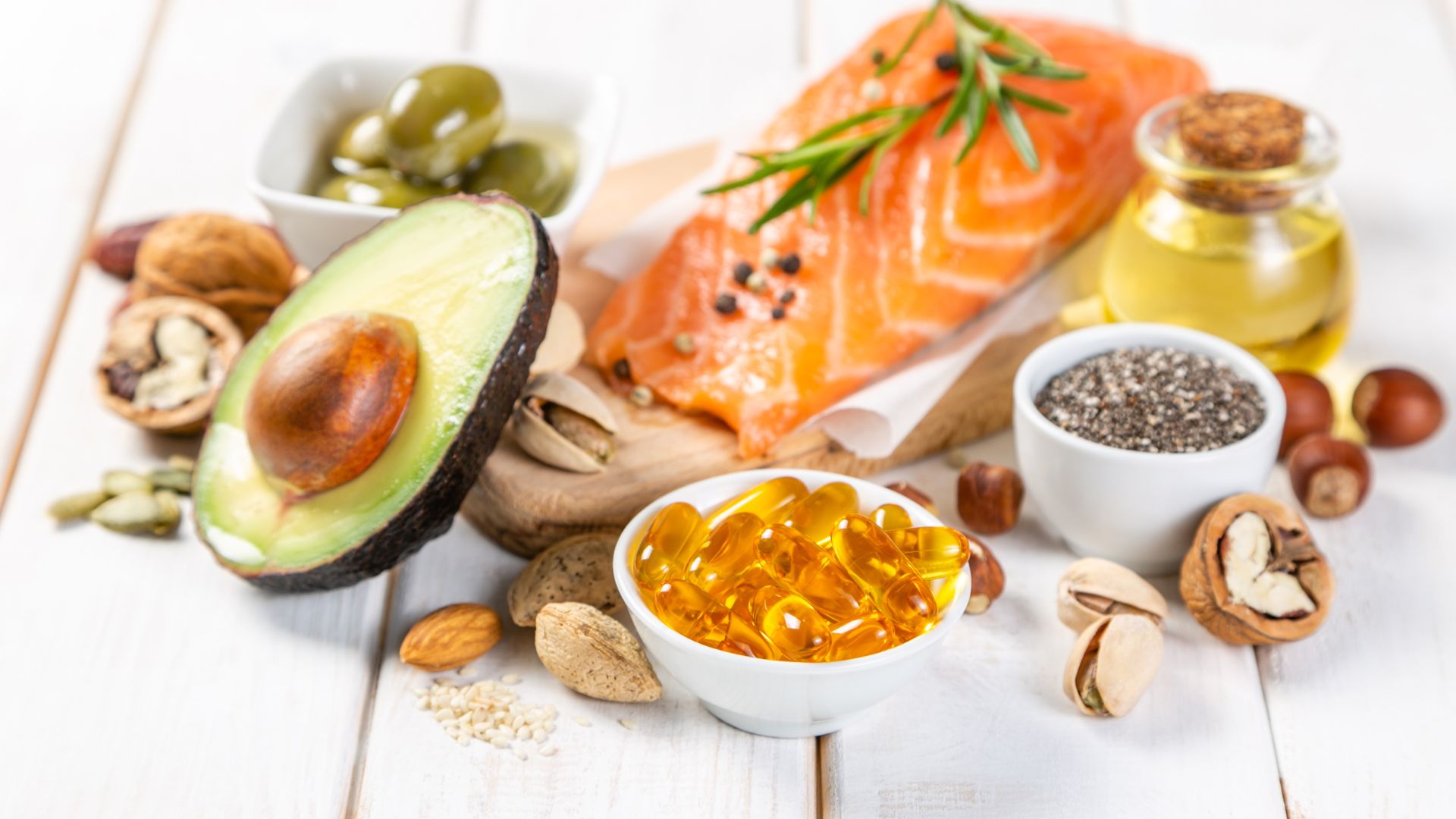
ALA (alpha-linolenic acid) is the essential omega-3 found in plant foods such as flaxseed, chia seeds and walnuts. It's called "essential" because our bodies can't make it from scratch, so it has to come from our diet.
EPA (eicosapentaenoic acid) and DHA (docosahexaenoic acid) are the long-chain omega-3s found mainly in oily fish and seafood.
Our bodies can convert ALA into EPA and then DHA, but that conversion is limited. That's one reason getting EPA and DHA directly can be important.
Where does fish get its omega-3?
I'd always assumed oily fish somehow made it themselves. In fact, it starts with microalgae, which produce EPA and DHA. These pass up the food chain as small marine organisms eat the algae and larger fish eat them.
That's also why what a fish eats matters. Farmed fish are fed formulated diets that have changed over the years, and research has documented lower EPA and DHA concentrations in farmed salmon over time [link]. But farmed salmon can still be a good source, sometimes providing as much or more per serve than wild, because it tends to contain more total fat.
So the takeaway isn't "only eat wild fish." It's that "I eat fish" doesn't automatically tell us how much EPA and DHA we're getting.
What do EPA and DHA actually do?
This is the part I found most interesting. EPA and DHA become part of the membranes surrounding our cells. Those membranes aren't simply little bags holding everything in. They're dynamic structures involved in cell communication and signalling.
DHA has a particularly important structural role and is highly concentrated in the brain and retina. EPA and DHA are also used to make signalling molecules that help the body resolve inflammation, which matters because healthy inflammation isn't meant to just keep burning. It's meant to switch off.
Omega-3 isn't simply another "healthy fat." These fats become part of our cells.
And what about omega-6?
This is where the conversation can become unnecessarily black and white. Omega-6 is also essential. One omega-6 fatty acid, arachidonic acid (AA), is part of our cell membranes and is involved in cell signalling, immune function and our normal inflammatory response.
So this isn't omega-3 good, omega-6 bad. Both have important roles. The bigger picture is about balance, and making sure we're getting enough of the long-chain omega-3s, EPA and DHA.
What does the omega-6:3 ratio tell us?
One commonly discussed measure is the balance between omega-6 and omega-3 fatty acids overall. A more specific version compares AA with EPA, since those two produce different signalling molecules.
But a ratio is only one part of the picture. Two people could have a similar ratio but quite different amounts of EPA and DHA. So rather than asking "is omega-6 too high?" or "is omega-3 too low?", it's more useful to look at the broader picture, including how much EPA and DHA are actually present.
The same goes for cell "fluidity." The fats in our membranes do influence their structure and flexibility, but it's not as simple as an imbalance "blocking" cells. Omega-3 is one important piece of a much bigger biological picture.
So how much fish do we actually need?
For Australian adults, the Heart Foundation recommends 2 to 3 serves of fish each week, including oily fish, as one way of getting around 250 to 500 mg of EPA and DHA a day. A serve is about 100 g of cooked fish. Sardines, mackerel, Australian salmon, Atlantic salmon and rainbow trout can all provide useful amounts.
If you don't eat fish, algal oils are worth knowing about. They provide DHA, and some provide EPA too, without the fish in the middle.
But are you actually getting enough?
This is the question I've become most interested in. We can look at what we eat and estimate our intake. But how do we know what's actually showing up in our bodies?
A fatty-acid blood test gives an objective picture of what's in your blood, rather than relying on what you think you're consuming.
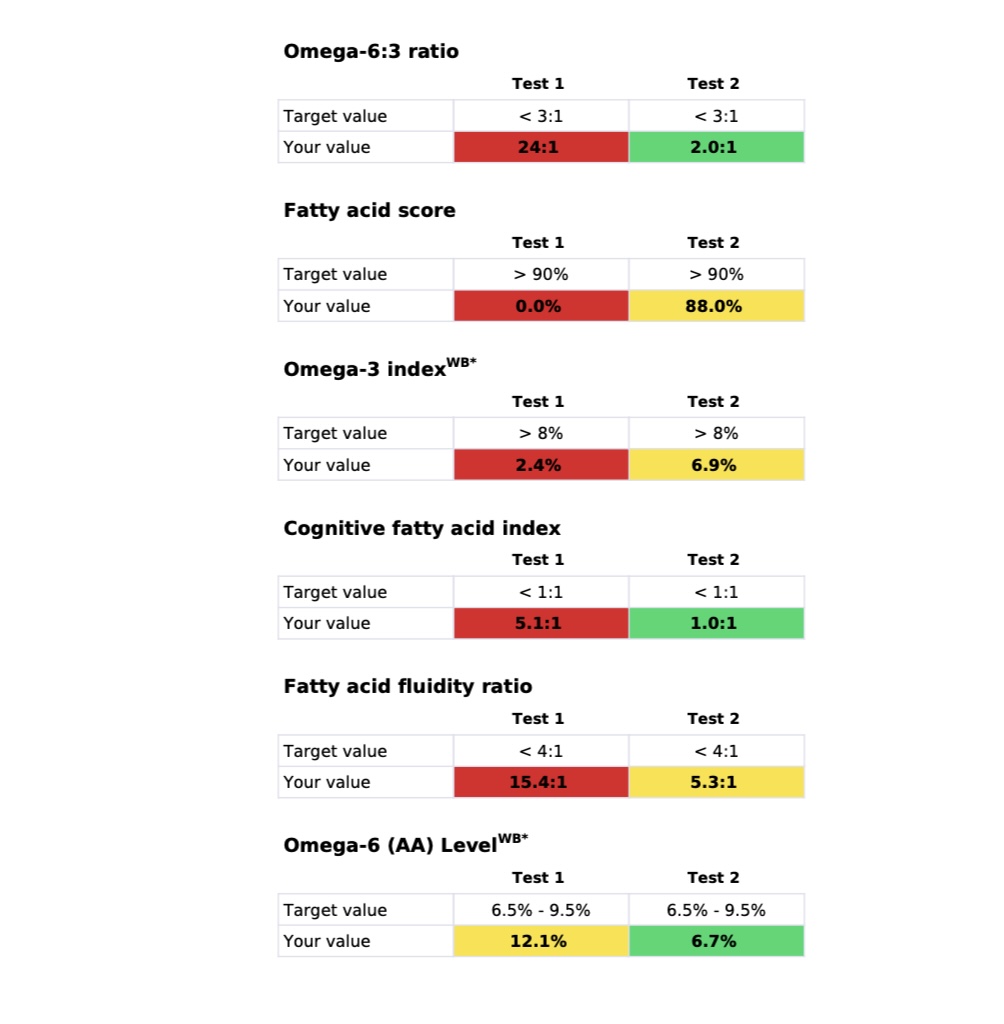
I'd assumed that because I ate pretty well, I was getting what I needed. My results told me otherwise. My omega-6:3 ratio was 24:1 (ideally under 3:1), and my Omega-3 Index was 2.4% (the target is above 8%).
The recommended retest time is 120 days, which is roughly how long it takes our red blood cells to turn over. I chose to retest early, at 60 days. In that time I'd made changes to my omega-3 intake. My ratio had dropped to 2:1 and my Omega-3 Index had risen to 6.9%. That's not quite at the 8% target yet, so I'm looking forward to my next test, and it was fascinating to see how much those numbers could shift.
For the first time, I had an objective starting point rather than a guess. That doesn't mean everyone needs to obsess over numbers or chase a "perfect" result. But sometimes what we think we're getting and what's actually in our blood are two different things.
My Results After 60 Days
Coming back to the foundations
There isn't one nutrient that fixes everything. We still need protein, fibre, colourful plants, movement, sleep and stress management, all those decidedly unexciting things I talk about all the time!
But essential fatty acids deserve a more prominent place in that conversation than I'd been giving them.
So perhaps the question isn't "Am I eating perfectly?" Maybe it's simply: "Am I giving my body enough of the raw materials it needs?"
And sometimes, rather than guessing, it helps to find out.
Curious about your own levels? If you're curious about your own levels, I'm happy to talk through what testing involves. Get in touch at sharongleeson.com if you'd like to know more.