Burnout Isn't a Personal Failure
Why This Matters
When someone burns out, we often look for what they did wrong. Didn't they manage their time? Couldn't they cope? Why didn't they say something sooner?
If you've been there yourself, you've probably asked yourself those same questions. But burnout is rarely a personal failure. It's usually a system under pressure: too much demand, and too little recovery.
How Burnout Develops
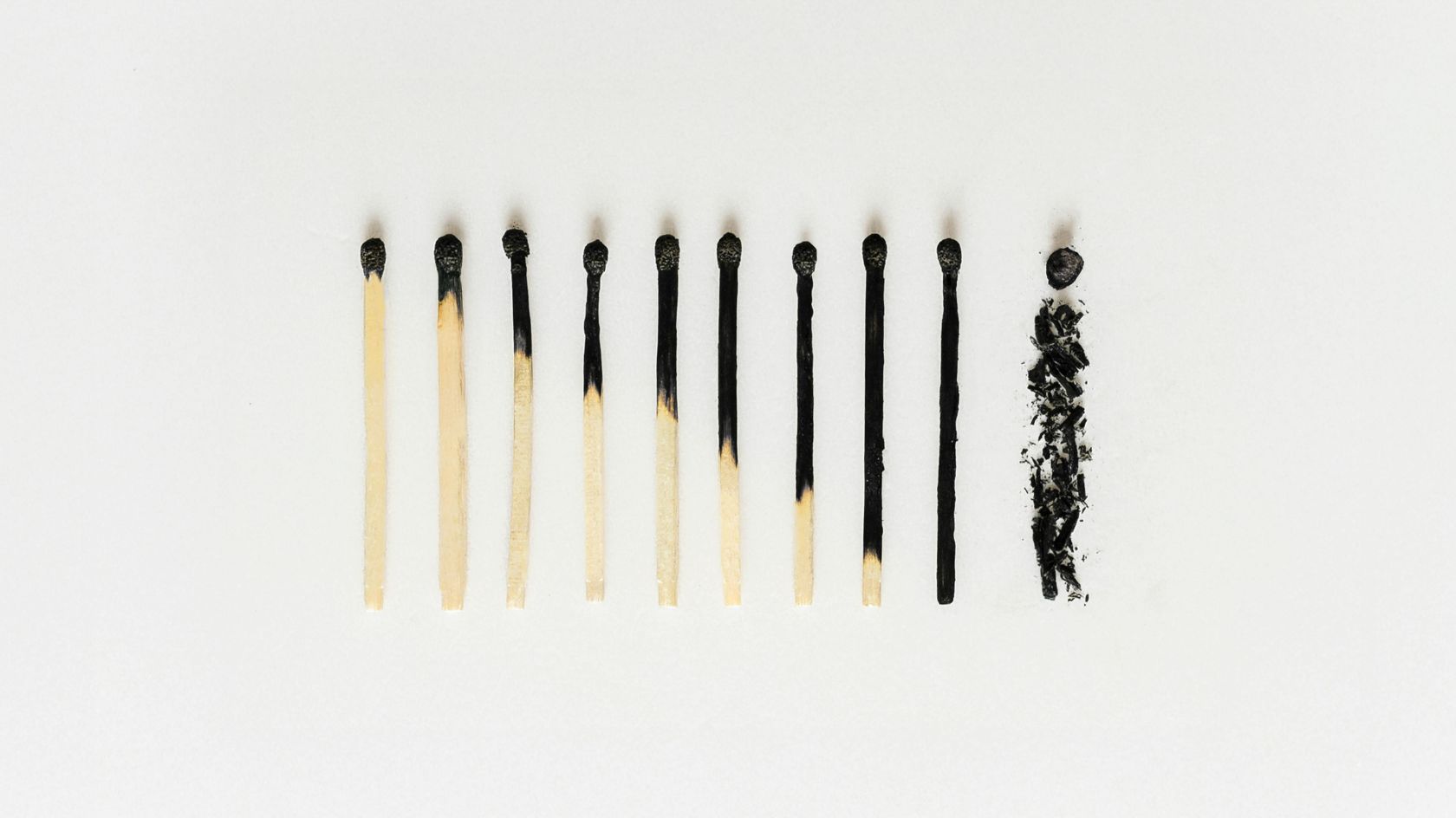
Burnout doesn't arrive overnight. It moves through stages, a bit like a funnel.
It starts at the top with demands, at work and in life. Those demands create mental load: the constant list of things to remember, organise and worry about.
Then comes decision fatigue. Every day, you're making hundreds of decisions about clients, people, priorities and problems. And that's before you get home and someone asks what's for dinner. Have you ever spent all day solving complex problems, only to find that choosing a meal felt like one decision too many? That's decision fatigue.
When the brain is tired, it defaults to the easiest option. So the health habits slip. Less movement. Poorer sleep. Irregular meals. No downtime. Then energy declines. And without anyone really noticing, you reach the bottom of the funnel: burnout.
This isn't a motivation problem. It's a capacity problem.
Picture a typical Tuesday. Seven back-to-back meetings with no breaks. Lunch eaten at your desk, if at all. Two people need something urgently. At 4pm, a problem lands that needs sorting before you can leave. You finish late, skip the walk you'd planned, grab something easy for dinner, check email in bed and lie awake replaying the day. Now imagine that's most Tuesdays.
What Causes Burnout?
There are two layers to think about.
The first is the work itself. Christina Maslach, who has researched burnout for decades, found that it's driven by mismatches in six areas of work:
- Workload. Too much, for too long.
- Control. Not enough say over how you do your work.
- Reward. Effort that isn't recognised.
- Community. Feeling isolated, or in conflict with the people around you.
- Fairness. Decisions that feel unjust.
- Values. Being asked to work in ways that don't sit right with you.
The second layer is us. Perfectionism.
- Being always 'on'.
- Struggling to say no.
- Very little recovery.
- The load we carry outside work, whether that's young kids, ageing parents, our own health or life-stage changes like perimenopause.
These personal factors don't cause burnout on their own, but they affect how much capacity we bring to work. When both layers are under pressure at the same time, the funnel narrows quickly.
Why This Matters
Understanding the causes changes the conversation. If burnout is a personal failure, the answer is to try harder. But trying harder is exactly what got most people into trouble.
If burnout is a system under pressure, the answer is to look at both layers. What can change in how the work is set up? And what can you change in how you support yourself?
You can't always control the demands placed on you. But you can take ownership of how you look after yourself, the boundaries you set, the habits you build and the support you seek.
Your Reflection
- Which of the six areas of work feels most out of balance for you right now?
- What's happening outside work that's affecting your capacity?
- Is there one conversation, at work or at home, that could lighten the load?
You might also find my other blog helpful: 'Why we don't do what we know we should, and how to close the Knowing-Doing Gap.'
If you'd like help working out what's driving your exhaustion and what to do about it, I offer one-off coaching sessions and ongoing packages. Get in touch.